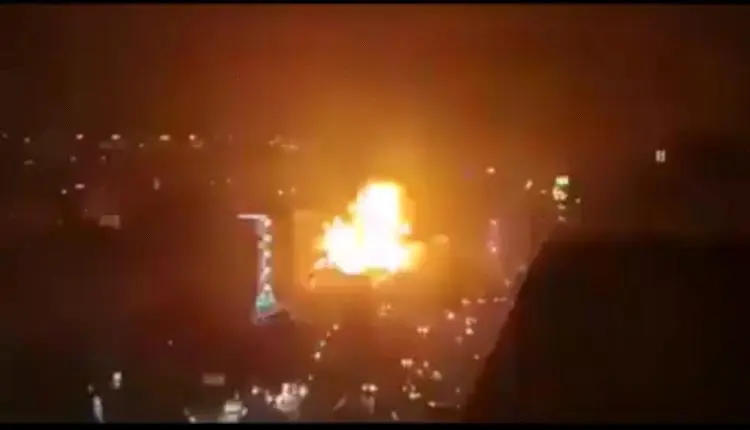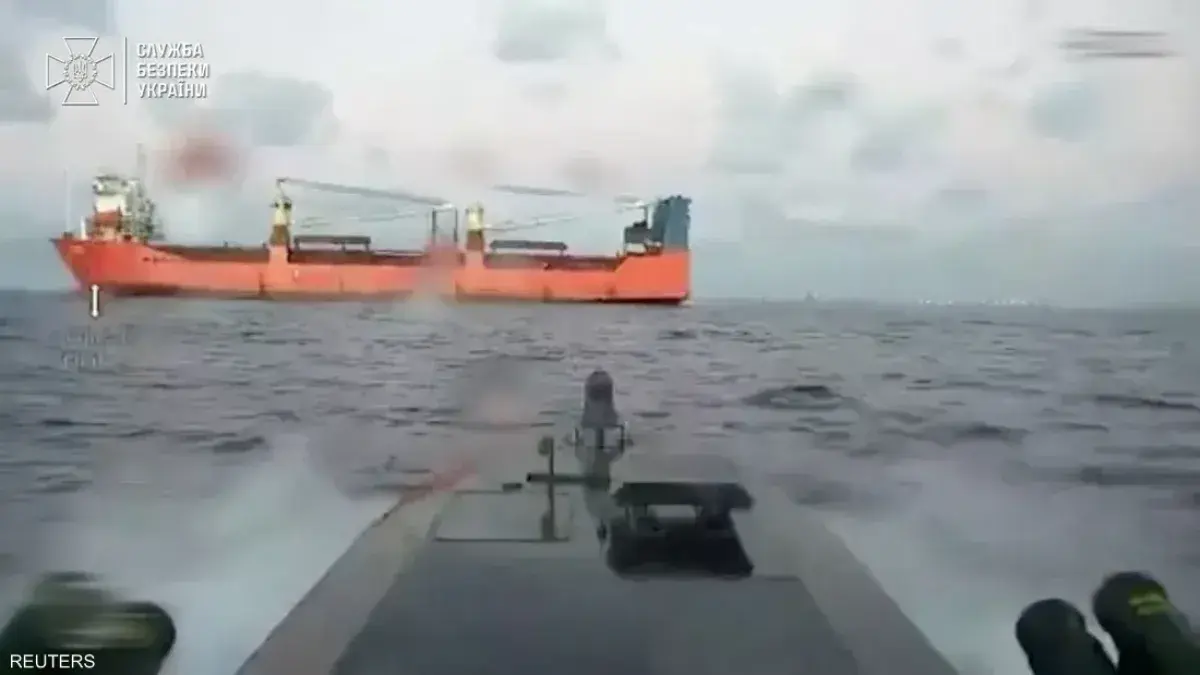
An Ukrainian strike targeting Russian naval vessels in the Libyan city of Benghazi has opened a new chapter in the confrontation between Moscow and Kyiv, extending the war's repercussions into the Mediterranean region and placing Libya at a crucial point of interest due to Russia's significant presence outside Europe.
Ukrainian President Volodymyr Zelenskyy's acknowledgment of his country's responsibility for the attack on two Russian ships, including the naval vessel "Mercury," using seven naval drones, has raised questions about the motives behind choosing Libya specifically and whether Kyiv aims to expand its operations to disrupt Russian supply lines and its network of influence across Africa.
Libyan military officials initially reported that the drones were launched from a base operated by Ukrainian forces in western Libya, based on preliminary investigations, according to the Associated Press. President Zelenskyy later confirmed Ukraine's role in the operation, while satellite imagery revealed substantial damage to the Russian naval vessel.
Libya's strategic importance stems from its geographical location on the southern Mediterranean coast, its proximity to shipping lanes between Europe and North Africa, and its potential as a logistical corridor towards the Sahel and Sahara regions. A study by the Center for Strategic and International Studies indicated that Libya has become a key hub for Russian expansion in Africa, alongside Mali and the Central African Republic, particularly following shifts in Syria and the challenges they posed to Russia's military presence there. This significance has been further cemented by Russia's establishment of a network of military sites and bases in eastern Libya.
Claudia Gazzini, a senior analyst at the International Crisis Group specializing in Libya, stated that Ukraine's opportunity to strike Russian ships in Libya arose specifically due to the presence of Russian vessels in the country's east, comprising a warship and a cargo ship. She noted that the presence and docking of these Russian vessels in eastern Libya have been known for several years, with Russia's military footprint becoming increasingly visible, despite denials from authorities in eastern Libya. Gazzini suggested that Zelenskyy's remarks about sending a message—that Ukraine can strike anywhere from Siberia to the Libyan coast—highlighted the attack's objective: to demonstrate Kyiv's capability to launch strikes even in the Mediterranean and its readiness to target a warship there, marking the first such operation by Ukraine in the Mediterranean.
Regarding the possibility of Libya becoming a new theater for the Russia-Ukraine conflict, Gazzini expressed skepticism, explaining that the country's division, competing governments, and opposing military alliances do not equate to direct warfare between the factions. She emphasized ongoing discussions about revenue sharing and political settlements, cautioning against oversimplifying the Libyan scenario as a clear alignment of Tripoli with Kyiv against Moscow. Gazzini further asserted that it is premature to consider Libya a direct battlefield, given the complexity of its internal dynamics and the lack of clear confrontation. She also pointed out that Moscow maintains commercial ties with Tripoli and suggested that Tripoli would likely approach any request for authorization to launch direct attacks on Russian assets from its territory with caution.
Gazzini described Libya's importance to Russia as relative, primarily serving as a logistical center for Moscow to dispatch military support to African Sahel nations, rather than being significant in itself. She added that Russia uses Libyan territory as a transit route for supplies and support to other parts of the continent. While acknowledging reports of Ukrainian forces present in western Libya, Gazzini clarified that this does not necessarily imply they are conducting or planning attacks from there.
Conversely, Libyan political analyst Kamal Al-Marash believes Libya has become an open arena for the Russia-Ukraine conflict, particularly following an alleged agreement in October 2025 between the Dbeiba government and Kyiv to bring in 250 Ukrainian military personnel to train its forces on drone usage against opposing armed groups. Al-Marash warned that Kyiv bears legal and political responsibility for the attack, and the continued presence of Ukrainian military elements within military sites in western Libya could lead to further strikes. He also anticipates a potential military response from Russia, possibly targeting sites from which attacks against its interests in the Mediterranean are launched.