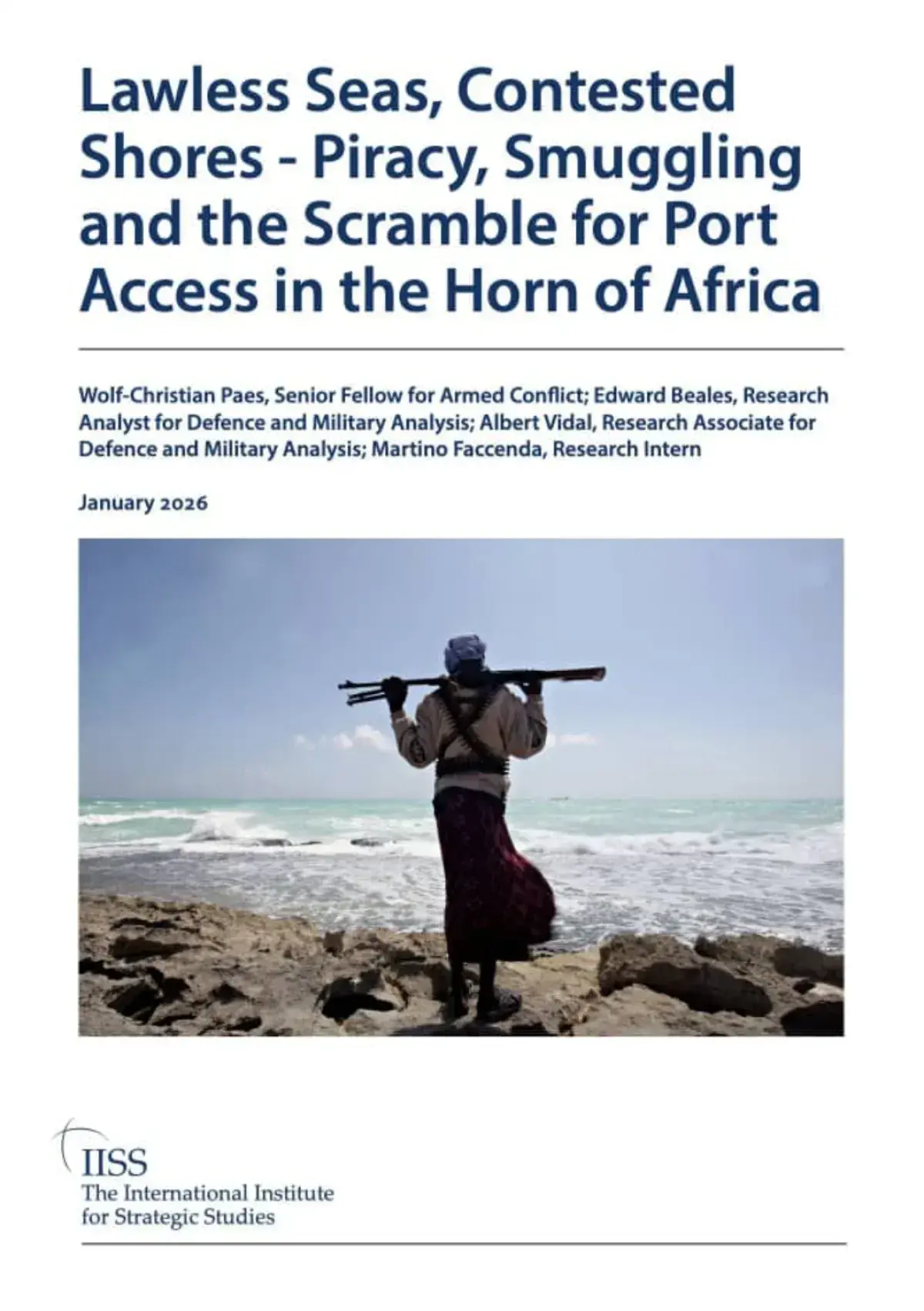
A new study by the International Institute for Strategic Studies (IISS) reveals cooperation between Iran-backed Houthi militants and the Somali group Al-Shabab. This collaboration includes Al-Shabab's request for advanced weapons and military training, facilitated by Iran across the Gulf of Aden.
The report, titled "Lawless Seas and Contested Shores: Piracy, Smuggling, and Competition for Port Access in the Horn of Africa," indicates that Al-Shabab representatives visited Sana'a at least twice in 2024 to request advanced weaponry from the Houthis. The UN Panel of Experts on ISIL (Da'esh) and Al-Qaida, citing intelligence from a member state, confirmed evidence of these meetings. Al-Qaida in the Arabian Peninsula reportedly facilitated these discussions due to its ties with Al-Shabab.
The internationally recognized Yemeni government has repeatedly stated that Houthi experts have traveled to Somalia to train Al-Shabab fighters. The report notes that over 400 Somalis have received training in camps controlled by the Houthi militia in Yemen.
Regarding the motivations behind this alignment, the report suggests the cooperation might be linked to commercial interests and the Houthis' potential to profit from arms sales to Horn of Africa militant groups. However, it leans towards the contacts being part of a broader effort to expand strategic cooperation with militant groups in Somalia, possibly initiated by the Houthis or as part of an Iranian strategy to extend its "axis of resistance" into East Africa.
The report also documents weapons smuggling networks operating between Iran, Yemen, and the Horn of Africa. Iranian supplies to the Houthis appear to intersect with the activities of smugglers and arms dealers on both sides of the Gulf of Aden. Between September 2015 and January 2024, 18 vessels carrying weapons, ammunition, and military components, including ballistic missiles, cruise missiles, and drones, were intercepted.
This enhanced cooperation in arms smuggling and technical training aligns with a UN Panel of Experts report from October 2025. That report confirmed increased collaboration between the Houthis and Al-Shabab over the past year, encompassing arms smuggling, technical training, and logistical support. The UN report detailed Houthi training for Al-Shabab on drone technology and the manufacturing of advanced explosive devices. The collaboration has reportedly evolved beyond initial logistical and intelligence coordination to direct political, media, and military dimensions.
Yemen's Minister of Foreign Affairs and International Cooperation, Afrah Al-Zouba, stated at the 2026 Manama Dialogue, organized by the IISS, that the 2025 experts' report highlighted growing cooperation between the Houthis and Al-Shabab in arms smuggling, training, and military expertise exchange. She emphasized that external support for the Houthi militia from Iran, Iraqi militant groups, and Hezbollah has been proven. Al-Zouba warned that protecting maritime routes requires eliminating threat sources and cutting off arms and funding flows, cautioning against the dangers of links between non-state armed groups and organized crime networks.
The Somali Federal Government has also warned of the increasing military and technical cooperation between the Houthis and Al-Shabab, an Al-Qaida affiliate. Somalia's Minister of State for Foreign Affairs, Ali Mohamed Omar, stated that while the Houthis and Al-Shabab differ in ideology, they cooperate in specialized technical fields. He noted that Al-Shabab's acquisition of advanced drone and weapons expertise could enhance its capacity for complex attacks, threatening civilians and increasing security pressure on the Somali government.
Somalia has long been a route for illicit arms smuggling into the country, with these networks predating the Houthis. However, reports of a shift from mere arms smuggling to technical and military cooperation are a cause for increased concern. A February 2026 report by the Mogadishu-based Hiraan Institute suggests the cooperation has moved from logistical and intelligence coordination to direct political, media, and military dimensions, becoming more organized and systematic, posing a threat to regional security in the Red Sea and the Horn of Africa.
Despite ideological differences—the Houthis being Zaydi Shia and Al-Shabab a Salafist jihadist movement loyal to Al-Qaida—intersecting security, economic, and logistical interests have fostered cooperation. Al-Shabab has faced challenges accessing weapons, with the Houthis emerging as a key supplier. Former US envoy to Yemen, Tim Lenderking, confirmed Houthi arms provision to Al-Shabab, and the UN experts' report noted a significant increase in small arms and light weapons smuggling between the two groups. This convergence could enable Iran to leverage Houthi capabilities in Yemen and Al-Shabab's reach in Somalia, potentially expanding pressure on international shipping and Western interests in the Horn of Africa.
Al-Shabab is positioned on the African side of the Gulf of Aden and Bab el-Mandeb strait, while the Houthis control significant parts of Yemen's Red Sea coast along the same strait. This makes the Gulf of Aden a strategic link between the two groups, ideal for smuggling and transferring fighters and expertise. This cooperation coincides with increased Houthi attacks on international shipping, leading to unprecedented reductions in trade through the Red Sea and Suez Canal. Observers warn that the Houthis act as intermediaries between Iran and certain Horn of Africa militant groups, combining Iran's strategic and technical expertise with Houthi operational experience and local groups' ability to operate within the region.
International calls are mounting for information sharing, cutting off funding and arms sources for these groups, and halting the flow of Iranian weapons to the Houthis and subsequently to Al-Shabab. Reports indicate common interests, cooperation, and supply networks between the Houthis and Al-Shabab. While conclusive evidence of a unified command structure from Tehran to Al-Shabab may be lacking, the shift from traditional smuggling to organized military and technical partnership poses a significant threat to international navigation and regional and international interests in the Red Sea and Gulf of Aden.